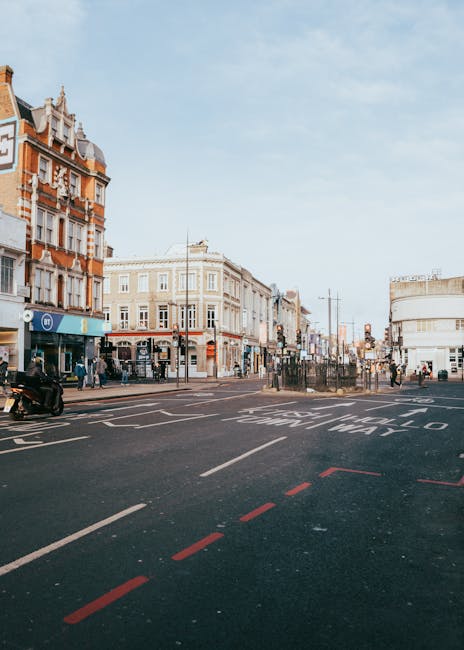
Haringey Council ULEZ and Charges That Affect Removals
Moving home or office in North London sounds straightforward until the real-world costs start stacking up: congestion, ULEZ, parking permissions, access issues, and the awkward question of whether your removal van is compliant. If you are planning a move in or around Haringey, understanding Haringey Council ULEZ and charges that affect removals can save you time, money, and a proper headache on moving day. Truth be told, a lot of people only think about boxes and tape. Then the van arrives, the street is tighter than expected, and the meter starts ticking.
This guide breaks down what the charges are, how they can affect removals, what to watch for, and how to plan a move that stays efficient. You will also find practical steps, a comparison table, a checklist, and answers to the questions people actually ask when they are trying to organise a move without unwanted surprises.
Why Haringey Council ULEZ and charges that affect removals Matters
Let's start with the bit that matters most: removals are rarely just about transport. They are a time-sensitive, access-sensitive job, often happening on streets where parking is tight, loading space is limited, and every extra delay costs money. In Haringey, that can mean dealing with council-controlled parking rules as well as wider London road charges such as ULEZ, depending on the vehicle being used and the route taken.
Why does this matter so much? Because moving day already comes with enough moving parts. If the removal vehicle is not compliant, or if parking and loading were not planned properly, the job can become more expensive very quickly. A small delay outside a terraced street near a busy high road can snowball into wasted labour time, frustrated neighbours, and a much longer handball from van to front door. No one wants that at 8 a.m. on a wet Tuesday.
For households, the effect is often hidden inside the overall quote. For businesses, especially offices or shops relocating in Haringey, the impact can be bigger because the move may involve larger vehicles, more trips, and more complex scheduling. That is why this topic is not just for compliance nerds. It is for anyone who wants the removal to happen smoothly, without surprise charges creeping in at the last minute.
Practical takeaway: the cheapest quote on paper is not always the cheapest move in reality. If the van is non-compliant, if the route crosses charge zones, or if parking is not planned, the final bill can change shape fast.
How Haringey Council ULEZ and charges that affect removals Works
To understand the moving implications, it helps to separate the different cost layers. People often lump everything together, but they are not the same thing.
1. ULEZ and vehicle compliance
ULEZ is designed to discourage higher-emission vehicles from driving within the zone unless they meet the relevant standards or a charge is paid. For removals, the key question is usually the vehicle used by the removal company. If the van or truck is compliant, the move is simpler. If not, the operator may face a charge that could be passed on in the quote or absorbed as a business cost. Either way, it matters.
In practical terms, this can influence the type of vehicle chosen. A smaller, newer van may be more likely to be compliant than an older diesel lorry. That does not automatically mean "small is best", though. If the job needs too many trips, a smaller vehicle can end up costing more in time and labour. There is a balance to strike, and it is not always obvious at first glance.
2. Council parking and loading restrictions
Local parking restrictions can affect how close the removal vehicle can get to the property. In Haringey, as in many London boroughs, loading bays, suspended bays, permit zones, yellow lines, and timed restrictions may shape the move. If a vehicle cannot stop nearby, the crew may have to carry items further. That slows everything down and may increase the price if extra labour time is needed.
This is often where removals get unexpectedly fiddly. You think, "We only need twenty minutes to load the sofa." Then the nearest legal stopping point is two streets away, and suddenly the sofa feels a lot heavier than it did in the living room.
3. Access and route planning
The route to the property can be just as important as the property itself. Narrow roads, school-run traffic, market activity, or temporary roadworks can all affect timing. If a removal vehicle has to take a longer route to avoid charge zones or restricted streets, the move may need an earlier start or a tighter schedule.
Good removal planning should therefore include:
- vehicle compliance checks
- route planning around charging zones
- parking and loading arrangements
- access issues at both addresses
- estimated carry distance
- possible delays from traffic or restrictions
4. Who usually pays?
That depends on how the removal service is structured. Some companies include compliance-related costs in the quote. Others may itemise certain expenses, especially for larger or more complex moves. A customer should always ask what is included and whether there are any charges linked to vehicle compliance, congestion, parking, or waiting time. Clear wording upfront prevents awkward discussions later. And yes, they do happen.
Key Benefits and Practical Advantages
Planning around Haringey Council ULEZ and charges that affect removals may sound like an administrative chore, but it has some very real upsides. The best moves tend to be the ones that look boring from the outside. That is usually a good sign.
Reduced risk of surprise costs
When compliance and parking are checked in advance, you are less likely to face add-on charges on moving day. This matters even more for local moves where people assume the job will be quick. A quick move can become a slow move in one tight parking bay.
Better vehicle choice
Knowing the charging context helps the removals team choose the right van or truck. Sometimes a slightly different vehicle size or emission class makes the whole job more efficient. In other words, the best vehicle is not just the one that fits the sofa. It is the one that also fits the rules.
Less downtime
Delays cost money. If a compliant van can access the street and stop legally close to the entrance, crews spend more time moving items and less time navigating parking puzzles. That makes the job calmer for everyone.
Improved quoting accuracy
For customers, accurate information leads to more realistic quotes. If the removal company knows the postcode, vehicle access limits, and whether there is a charge zone issue, they can price the job more honestly. That builds trust. Simple, but important.
Lower stress on moving day
There is a noticeable difference between a move that has been properly planned and one that relies on optimism. You can hear it in the tone of the day. Less rushing, fewer phone calls, fewer "hang on a second" moments on the pavement with a clipboard in hand.
Expert summary: the biggest advantage of planning for charges and compliance is not just saving money; it is keeping the move under control. In removals, control is currency.
Who This Is For and When It Makes Sense
This topic is relevant to much more than one type of customer. If anything, it matters most when the move looks simple on paper but the street-level reality is less forgiving.
Home movers in Haringey
If you are moving from a flat, terrace, maisonette, or family home, the street layout and parking position can strongly affect the removal plan. Even a small one-bed move can be tricky if the van has nowhere legal to stop close to the door.
Landlords and tenants
End-of-tenancy moves tend to run to a tight timetable. That means no room for parking mistakes, late arrivals, or a second trip because the first vehicle was not suitable. If a deposit handover is waiting on the other end, you really do not want a slow start.
Office and commercial movers
Business relocations often involve more equipment, more furniture, and more coordination. A team moving desks, chairs, filing cabinets, monitors, and archived material may need a larger van or a multi-vehicle setup. That is where charge planning starts to matter in a very real way.
If your business move also involves office removals or a broader commercial moves service, it is worth checking how the operator handles route planning, loading access, and vehicle compliance before the day arrives.
People using man and van services
Smaller jobs sometimes use a man and van style service or a dedicated removal van. Even then, the vehicle still needs to suit the route, the street, and the charge environment. A "small move" does not mean "no planning required".
Anyone moving in a busy London street
Haringey includes areas where parking is limited, traffic is dense, and timing matters. If your move involves a main road, a controlled parking zone, or a narrow residential street, you should plan ahead. It makes sense even more if the property has awkward access, stairs, or no proper place to set down furniture.
Step-by-Step Guidance
If you want to avoid unnecessary costs, the best approach is to treat the move like a short project. Not a huge corporate project, just a practical one with a few moving pieces. Here is a sensible order of operations.
Step 1: Confirm the property details
Start with the basics: full address, floor level, lift access, parking options, and whether the van can stop directly outside. If there is a loading restriction, a permit requirement, or a narrow entrance, say so early. The details that feel minor in a phone call are usually the details that matter at curb level.
Step 2: Check vehicle suitability
Ask what type of vehicle will be used and whether it is compliant for the route. A newer compliant van may avoid charge issues, but it should still be the right size for the job. There is no point sending something tiny if it means extra loads and longer labour time.
Step 3: Review parking and loading arrangements
Find out whether a permit, suspension, or loading plan is needed. If the move is near a busy road or a controlled zone, build in time for the vehicle to park legally. That little extra buffer can be the difference between a calm start and a race against the clock.
Step 4: Ask about charge-related costs
Some companies bundle potential charge-related expenses into the quote; others itemise them. Ask direct questions:
- Is the vehicle compliant for the route?
- Are any charge-zone costs included?
- Will waiting time be charged if parking is delayed?
- Is there a price difference for a larger vehicle?
- What happens if access is worse than expected?
Step 5: Book the move with realistic timing
It is usually sensible to avoid peak traffic where possible. A 7 a.m. start may sound painful, but sometimes it saves money and hassle because the roads are clearer and loading is easier. Not every move needs dawn patrol energy, of course. But for dense London streets, earlier can be better.
Step 6: Prepare the property for quick loading
Clear hallways, reserve lift space if applicable, label fragile items, and keep the path to the van open. The cleaner the flow from front door to vehicle, the lower the chance of delay. A neatly staged move often looks almost unfairly easy. Almost.
Step 7: Confirm the plan the day before
Give the move a final check the day before. Weather, access changes, or last-minute parking issues can all change the setup. A short confirmation call or message can prevent a lot of scrambling the next morning.
Expert Tips for Better Results
After enough moves, a few patterns become obvious. The ones that go well are rarely "lucky". They are usually the ones where the boring admin was done properly.
Tip 1: Be exact about the vehicle size you need
If you underestimate the load, the team may need multiple runs. If you overestimate too much, you may pay for unused capacity. A good operator will help you work this out, but only if you give clear information about furniture, boxes, access, and stairs.
Tip 2: Treat "close enough" as a warning sign
When someone says, "It should be fine," it may be fine. But in removals, "should be fine" is not the same as "confirmed". If the street is tight or the parking is uncertain, ask for a proper plan rather than a hopeful shrug.
Tip 3: Plan for the awkward item first
The sofa is rarely the real problem. It is the wardrobe, the bed frame, the large mirror, or the heavy office cabinet that causes the headache. Think about the biggest awkward piece first, then work backwards from there. That usually gives the most realistic vehicle and loading plan.
Tip 4: Keep a buffer for access delays
Even well-planned moves run into small delays. Someone is still packing. The lift is busy. A neighbour has parked where you expected to load. A bit of buffer protects you from that familiar moving-day panic, the one where everyone suddenly talks faster.
Tip 5: Ask how compliance is handled, not just whether it is handled
There is a difference between a company saying "yes, we deal with that" and explaining exactly how they deal with it. One is a reassurance. The other is a plan.
Tip 6: Keep the property ready early
In our experience, the most efficient moves often start the night before. Boxes out of the hallway. Fridge defrosted if needed. Keys ready. Door code checked. Small things, big effect.
Common Mistakes to Avoid
There are a few predictable errors that can make Haringey moves more expensive than they need to be. Most of them are avoidable, which is the annoying part.
1. Booking a vehicle without checking compliance
Assuming the removal van is compliant because it "looks modern" is not enough. Vehicle compliance depends on the actual spec, not the paint job. That is a surprisingly common mistake.
2. Ignoring parking restrictions
Some customers focus entirely on the house contents and forget the street outside. But the street is half the job. If the van has no legal stopping point, the move slows down, sometimes dramatically.
3. Underestimating loading time
A move from a ground-floor flat with easy access may still take longer than expected if there are several awkward items or a long carry distance. Underestimating time often leads to rushed decisions. Rushed decisions lead to extra cost. Not ideal.
4. Failing to mention access details
If there is a steep driveway, low bridge, height restriction, shared entrance, or service road limitation, say so. It is much better to sound a bit over-detailed than to surprise the crew on arrival.
5. Comparing quotes without checking what is included
Two quotes can look similar and still be miles apart in what they cover. One might include route planning, compliance checks, and labour buffers. Another might not. Compare like with like, or you may choose the wrong deal by accident.
6. Leaving the plan too late
Last-minute bookings can be fine for urgent moves, but they reduce the room for careful planning. If the move is in a busy part of Haringey, earlier planning usually pays off.
Tools, Resources and Recommendations
You do not need fancy systems to plan a good move. A few simple tools and habits go a long way.
Useful planning tools
- A notes app or checklist for access details
- A floor plan or rough sketch of room contents
- Photos of stairs, parking space, entrance, and large items
- A calendar reminder for booking confirmation
- Labels for rooms and priority boxes
What to ask the removal company
Ask whether they provide a pricing and quotes process that takes access and vehicle requirements into account. That is usually a good sign. Transparent quoting tends to be a sign of organised operations, and organised operations matter a lot when parking and compliance are in play.
You may also want to review the company's insurance and safety approach, especially for fragile items, long carries, or tight stairwells. For jobs involving careful packing, the option of packing and unpacking services can reduce the risk of delays and damage.
Practical service options to consider
- home moves for standard household relocations
- house removals for full-property moves
- man with van removal for smaller or more flexible jobs
- removal services for broader support across different move types
If you are moving bulky household furniture, a service like furniture pick up may also help if you are clearing items before moving day. That can make the main removal simpler, and sometimes that is half the battle.
Law, Compliance, Standards, or Best Practice
When removals intersect with charging zones and council-managed streets, the safest approach is to stay within the applicable rules and local restrictions. That means checking what applies to the vehicle, the route, and the parking conditions at both ends of the move.
For removals, best practice usually includes:
- using a vehicle suitable for the load and access conditions
- checking the route for restrictions before the job starts
- avoiding illegal stopping or parking, even for a short load
- communicating access limitations clearly to the crew
- keeping evidence of agreed arrangements where relevant
It is also wise to understand company terms before booking. The small print can matter more than people expect. A removal business with clear terms and conditions, sensible payment and security practices, and a visible health and safety policy is usually easier to deal with when a move gets complicated.
Best practice on the customer side is just as important. Give accurate information, keep access routes clear, and avoid assumptions. The team cannot plan for a parking bay that suddenly disappears, or a vehicle restriction no one mentioned. Fair enough, that is life. But clear communication makes it much easier.
Options, Methods, or Comparison Table
Different removal setups handle Haringey charges and access issues in different ways. The right choice depends on your property, the amount to move, and how tight the street access is.
| Option | Best for | Pros | Watch out for |
|---|---|---|---|
| Small compliant van | Studio flats, light loads, quick local moves | Often easier to park and manoeuvre; may suit tighter streets | May require more trips or more labour time if the load is larger than expected |
| Larger removal truck | Full house moves, offices, bulky loads | Can carry more in one run; more efficient for big jobs | Harder to park, may face more access challenges, and needs better planning |
| Man and van service | Smaller moves, flexible collections, short-distance jobs | Good for speed and adaptability; often practical in busy areas | Can be less suitable for larger households or multi-room moves |
| Full removal team | Complex household or business relocations | More support, better for heavy items and structured loading | Usually costs more, but may save time and reduce stress |
The table is not a rulebook. It is a reality check. A larger truck is not automatically better, and a smaller van is not always cheaper in the end. The best fit depends on access, distance, and how much you are actually moving.
Case Study or Real-World Example
Imagine a family moving from a first-floor flat near a busy Haringey road to a semi-detached house a few miles away. On paper, it sounds like a standard local move. The furniture is manageable, the boxes are ready, and the clients expect a quick morning job.
Then the practical details arrive. Parking outside the flat is limited. The nearest loading space is shared with delivery traffic. The stairwell is narrow, and the wardrobe needs careful handling. The removal company has to decide whether a smaller van with easier access is better than a larger vehicle that might carry more but struggle with parking.
In a well-planned version of this move, the team checks vehicle compliance in advance, confirms parking options, and schedules the start time to avoid the worst of traffic. The clients are told to keep the hallway clear and have the fragile boxes ready first. One of the movers arrives early enough to assess the bay outside, and the loading sequence is adjusted on the spot.
The result? Less back-and-forth, fewer awkward pauses, and a move that feels controlled instead of chaotic. Nothing magical. Just proper planning.
Now compare that with a rushed version. No one checks the parking restrictions. The van parks too far away. The team has to carry each item further than expected. The day gets longer. Costs creep up. The family is tired before lunch. You can probably picture it already, and it is not pretty.
Practical Checklist
Use this checklist before moving day. It is simple, but it catches a lot.
- Confirm the exact pickup and delivery addresses
- Check whether the vehicle is suitable for the route and load
- Ask about any ULEZ-related or charge-zone implications
- Review parking, loading, and permit requirements
- Tell the mover about stairs, lifts, and access restrictions
- Measure large furniture or awkward items
- Separate fragile items and label them clearly
- Reserve time for packing the final boxes
- Keep keys, codes, and contact numbers ready
- Ask what happens if access is delayed
- Confirm the quote includes the right level of service
- Check whether insurance and safety procedures are in place
One line to remember: if the street looks awkward, it probably is awkward. Plan for that, not against it.
Conclusion
Haringey Council ULEZ and charges that affect removals are not just an administrative detail. They are part of the moving plan, and in London, they can shape the whole day. The right vehicle, the right access plan, and the right understanding of local restrictions can save money, reduce delays, and make the job feel much more manageable.
If you are moving within Haringey or into the area, the smartest move is to treat compliance, parking, and route planning as part of the service, not an optional extra. That one shift in thinking can turn a stressful day into a controlled one. And honestly, that is what most people want at the end of the day: fewer surprises, fewer costs, and a move that just works.
If you are comparing removal options, ask the awkward questions early. It is better to sound overly careful now than to be scrambling later with a van blocking a tight street and everyone checking their watch.
Get a free quote today and see how much you can save.
Frequently Asked Questions
What does Haringey Council ULEZ and charges that affect removals actually mean?
It refers to the practical impact of ULEZ-style vehicle rules, local parking controls, and related charges on moving services in Haringey. For removals, the issue is whether the vehicle can access the area efficiently and legally without creating extra costs.
Do removal companies usually pass ULEZ-related costs on to customers?
Some do, some do not, and some build those costs into the quote. It depends on the company's pricing model and the vehicle being used. Always ask what is included before you book.
Can a removal van be too large for Haringey streets?
Yes. Some streets are easier to serve with a smaller van, especially where parking is tight or access is narrow. That said, a vehicle that is too small can mean more trips, so it is a balance.
How do parking restrictions affect moving day?
If the van cannot stop close to the property, loading and unloading take longer. That can increase labour time and make the whole process less efficient. In some cases, it also increases the risk of parking penalties.
Should I choose the cheapest quote?
Not automatically. A cheaper quote may exclude planning, parking complications, or compliance-related costs. Compare what each quote actually includes, not just the headline price.
What details should I give the removal company in advance?
Give the exact address, property type, floor level, lift access, parking situation, large item sizes, and any restrictions on the street. The more accurate the information, the better the plan.
Is a man and van service suitable for a Haringey move?
Often yes for smaller moves, single-item collections, or short local jobs. For larger homes or commercial moves, a fuller removal setup may be more practical and less stressful.
What happens if the van cannot park near my property?
The team may have to carry items further, which can slow the move and increase the time needed. In some cases, that can affect the final cost if time or labour is extended.
How far ahead should I book a removal in Haringey?
As early as you can, especially if the move is on a busy road or involves parking restrictions. Early booking gives more room for planning and reduces the chance of last-minute compromise.
Are office removals affected in the same way as home removals?
Yes, and sometimes more so. Office moves often use larger vehicles, involve more items, and need tighter scheduling. That makes vehicle compliance and access planning especially important.
What is the best way to avoid hidden moving costs?
Be upfront about access, ask what the quote includes, and confirm how parking or compliance issues are handled. A clear quote is usually the best protection against surprises.
Can packing help reduce the impact of charges and delays?
Definitely. If items are packed, labelled, and ready to go, the crew can load faster and spend less time on site. That often reduces the risk of labour overruns and keeps the move smoother overall.